Hamsa Hand: The Universal Symbol of Protection
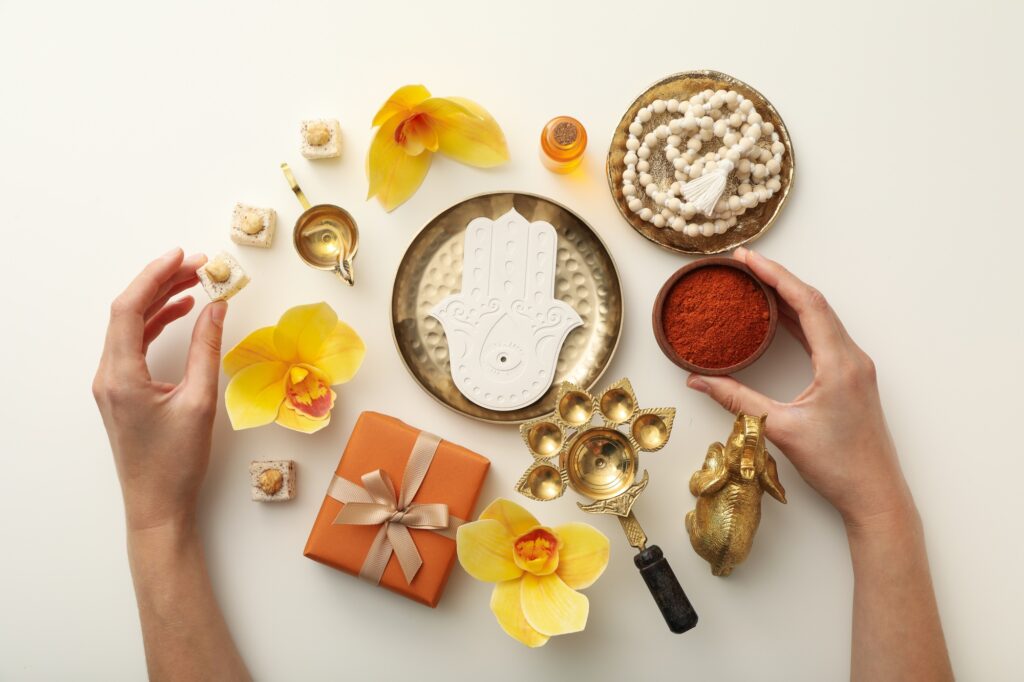
The hamsa hand appears as an open palm with five fingers, often decorated with an eye in the center. This powerful symbol crosses multiple cultures and religions, making it one of the most universal spiritual symbols in jewelry today. Ancient protection amulets like the hamsa demonstrate how jewelry has served as spiritual armor for thousands of years.
The Hamsa originated in ancient Mesopotamia (modern-day Iraq) and Carthage (modern-day Tunisia), where it was worn as an amulet to protect against the evil eye. Different religious communities call it by different names: Jewish people know it as the Hand of Miriam (after Moses’s sister), Muslims call it the Hand of Fatima (after Prophet Muhammad’s daughter), and Christians sometimes refer to it as the Hand of Mary. The word “hamsa” comes from the Hebrew word “hamesh,” meaning five, representing the five fingers and the five books of the Torah (the first five books of the Hebrew Bible).
In Hinduism and Buddhism, each finger on the Hamsa Hand represents a specific chakra. Thus, it is seen as a symbol of the flow of energy in the body. When worn as jewelry, the hamsa can face upward for protection or downward to attract abundance and good fortune. This versatility makes hamsa necklaces, bracelets, and earrings popular choices for people seeking spiritual protection in their daily lives.
The Ankh: Egypt’s Key to Eternal Life
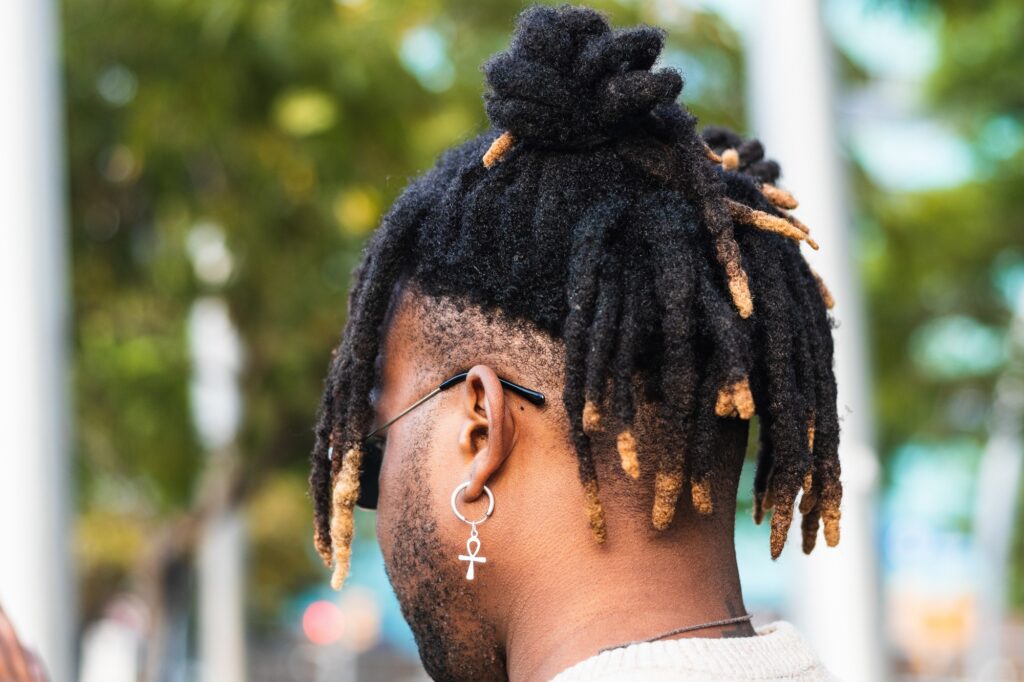
The ankh symbol looks like a cross with a loop at the top, earning it the nickname “Egyptian cross” or “key of life.” The ankh was originally an Egyptian hieroglyph used as a symbol of “life” and was placed on the lips of dead kings, bearing in mind that according to ancient Egyptian mentality, death did not mean the end, but was merely a transition to the afterlife. This ancient symbol represents the balance between opposing forces, such as masculinity and femininity, heaven and earth.
The ankh’s design carries deep meaning in each element. The circle at the top represents that which has no beginning and no end, symbolizing the celestial world and the spirit of Ra, the Sun God. The cross portion below represents the earthly realm and physical existence. Together, they create a powerful symbol of eternal life that transcends death. Modern ankh jewelry serves as a reminder of life’s precious nature and our connection to the divine.
When you wear an Ankh on your chest, it strengthens your heart chakra. It strengthens your passion and helps you act on your heart’s desires. Many people choose ankh pendants, earrings, and rings not only for their striking appearance but also for their connection to ancient wisdom and spiritual protection. The symbol remains popular among those interested in Egyptian spirituality, energy healing, and personal transformation.
Lotus Flower: Rising Above Life’s Challenges
The lotus flower creates one of nature’s most powerful spiritual metaphors. In nature, the lotus roots itself in mud, arising daily from the murky water to burst into bloom—a cycle that has made the lotus flower sacred in many cultures and has earned it the designation “Flower of Life”. This remarkable ability to bloom beautifully despite growing in muddy waters makes the lotus a perfect symbol for overcoming adversity and achieving spiritual growth.
Different cultures interpret the lotus flower’s meaning in unique ways. In Buddhism, the lotus signifies rising above life’s challenges and turning toward enlightenment; in Hinduism, Lord Brahma, creator of the Universe, sits on a lotus flower and holds one in his hand. Ancient Egyptians used white lotus flowers in healing ceremonies and saw them as symbols of rebirth and the daily cycle of the sun. The color of lotus jewelry also carries meaning: white represents purity and spiritual perfection, pink symbolizes the Buddha and spiritual awakening, red represents love and compassion, and blue signifies wisdom and knowledge.
When you wear lotus jewelry, you’re connecting with centuries of symbolism that speaks to personal growth, spiritual awakening, and inner strength. Lotus pendants, earrings, and rings serve as daily reminders that beauty and enlightenment can emerge from difficult circumstances. Many people choose lotus jewelry during times of personal transformation or as symbols of their spiritual journey toward self-improvement and inner peace.
Chakra Stones: Balancing Your Energy Centers
Chakra stones represent the seven main energy centers (chakras) in the human body according to Hindu and Buddhist traditions. The word “chakra” comes from the Sanskrit word for “wheel,” and this is how they are often depicted – as spinning wheels of energy. Each chakra corresponds to specific physical, emotional, and spiritual aspects of our being, and chakra jewelry uses colored gemstones to represent and balance these energy centers.
The seven chakras each have distinct colors and meanings. From red for the Root Chakra to violet for the Crown Chakra, these colors play a key role in chakra healing and visualization practices. Each color amplifies the energy and qualities of its respective chakra, helping you connect with and activate these energy centers more effectively. Root chakra (red) represents grounding and survival, sacral chakra (orange) governs creativity and sexuality, solar plexus chakra (yellow) controls personal power, heart chakra (green) manages love and compassion, throat chakra (blue) handles communication, third eye chakra (indigo) guides intuition, and crown chakra (violet) connects to spiritual consciousness.
When our chakras are in balance and functioning properly, energy flows freely and we feel healthy, balanced, and centered. However, when one or more chakras are blocked or out of balance, it can lead to physical, emotional, or mental imbalances and health issues. Chakra jewelry, including modern chakra healing accessories, helps wearers focus on balancing their energy centers through beautiful gemstone combinations that promote overall well-being and spiritual harmony.
The Cross: Christianity’s Symbol of Faith and Hope
The cross is a symbol that is central to Christianity. Wearing a cross or hanging a cross in the home is believed to protect you from the winds of misfortune. The cross represents the crucifixion and resurrection of Jesus Christ, symbolizing sacrifice, redemption, and eternal life. For Christians worldwide, cross jewelry serves as a visible declaration of faith and a reminder of God’s love and Jesus’s sacrifice for humanity’s salvation.
Cross jewelry comes in many styles, from simple gold or silver crosses to ornate designs with gemstones or engravings. Some crosses include additional Christian symbols like fish (ichthys), doves, or biblical verses. The Celtic cross combines the traditional Christian cross with a circle, representing the unity of heaven and earth or the eternal nature of God’s love. Orthodox crosses feature three horizontal bars and are used in Eastern Christianity.
Many people wear cross jewelry not only as religious symbols but also as sources of comfort during difficult times. The Cross is one of the most widely recognized religious symbols globally, primarily associated with Christianity. For many Christians, wearing a cross signifies faith in Jesus Christ and serves as a reminder of His sacrifice. Cross pendants, earrings, and rings offer wearers a tangible connection to their faith and serve as conversation starters about their beliefs and values.
Tree of Life: Connecting Heaven, Earth, and Family
The tree of life design is a large tree with roots and branches enclosed in a circle. The roots of the tree almost mirror the spreading branches, providing balance and symmetry. This ancient symbol appears in cultures worldwide, representing the interconnectedness of all life, family bonds, personal growth, and the connection between the physical and spiritual realms. The circular design emphasizes unity and the eternal cycle of life.
Different cultures interpret the Tree of Life according to their beliefs and traditions. Celtic Culture: Celts cherish trees for their spiritual conne
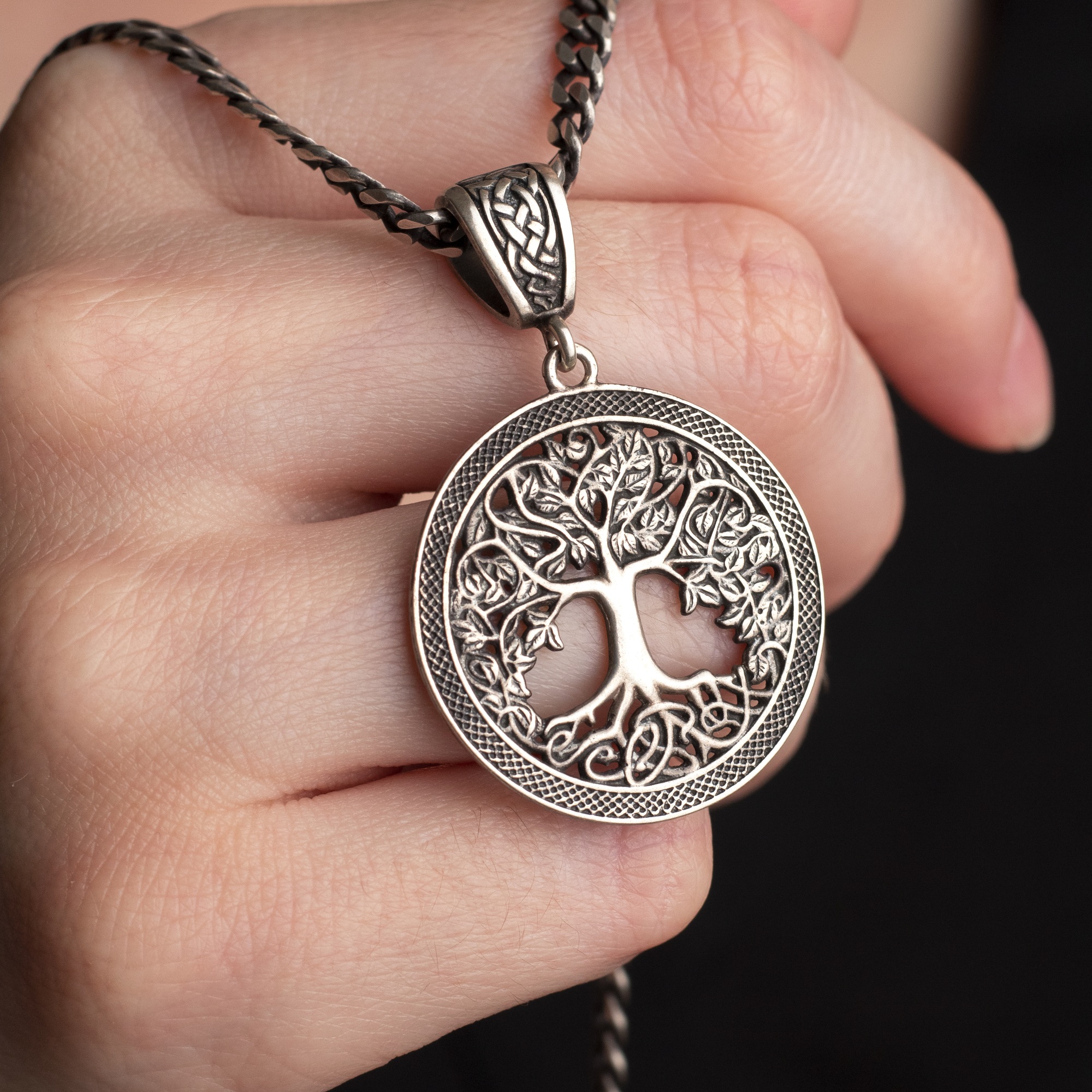
ctions to family, ancestors and deities. The tree of life represents the afterlife, and connection between the earth and heaven. In Norse mythology, Yggdrasil serves as the World Tree connecting all nine realms of existence. Christianity features the Tree of Life in the Garden of Eden as a source of eternal life, while Buddhism connects it to the Bodhi Tree under which Buddha achieved enlightenment.
The Tree of Life is an ancient symbol frequently associated with spiritual growth and continuity. It also sometimes represents our connection to Mother Earth and the cyclical nature of life and death. Tree of Life jewelry, including family heritage pieces, often features gemstones representing family members or personal milestones. Many people choose this symbol to honor their family legacy, celebrate personal growth, or maintain connection to nature and spiritual wisdom.
Evil Eye: Protection Against Negative Energy
The evil eye is a look given to inflict harm, suffering, or some form of bad luck on the person that it is cast upon. However, evil eye jewelry doesn’t attract negativity—it protects against it. The evil eye amulet, typically depicted as a blue eye, serves as a shield that reflects harmful energy back to its source while protecting the wearer from jealousy, envy, and malicious intentions.
The evil eye pendant is one of the oldest talismans. It has been around for thousands of years and can be dated back to Ancient Mesopotamia. It appears in numerous cultures around the entire Mediterranean Sea, Middle East and South Asia. The blue color traditionally used for evil eye jewelry holds special significance—blue represents spiritual strength, peace, and healing. Different colored evil eye amulets carry various meanings: light blue for general protection, white for purity and new beginnings, red for courage and energy, and green for success and balance.
Evil eye jewelry comes in many forms, from simple pendants to elaborate earrings and bracelets. The evil eye, or eye of protection, can be worn on a charm bracelet, a set of earrings, or a sleek and simple pendant. Everyday use protects the wearer against that all-present evil eye. Many people combine evil eye symbols with other protective amulets like hamsa hands or religious crosses for enhanced spiritual protection. This versatile symbol transcends religious boundaries and appeals to anyone seeking energetic protection in their daily life.
Om Symbol: The Sound of Universal Creation
The Om symbol is sacred in Hinduism, Buddhism, and Jainism. It represents the essence of the ultimate reality or consciousness. Om is considered a sound of creation and a representation of the universe’s vibrations. This sacred symbol looks like the number 30 with additional curves and represents the primordial sound from which all existence emerged. When chanted, “Om” creates vibrations believed to align practitioners with cosmic energy and divine consciousness.
The Om symbol contains profound meaning in its visual design. Each curve represents different states of consciousness: the bottom curve symbolizes the waking state, the middle curve represents the dream state, the upper curve indicates deep sleep, and the semicircle with the dot above represents the transcendental state of pure consciousness. This comprehensive representation makes Om jewelry particularly meaningful for meditation practitioners and spiritual seekers.
Wearing an Om amulet is believed to promote inner peace, balance, and spiritual growth. Its calming energy helps individuals connect with their higher selves while promoting mindfulness in everyday life. Om jewelry, often crafted in silver or gold and sometimes combined with gemstones, serves as a constant reminder to stay centered and connected to spiritual practice. Many yoga practitioners and meditation enthusiasts choose Om symbol accessories to support their spiritual journey and maintain awareness of universal consciousness throughout their daily activities.
Key Takeaways
- Spiritual jewelry symbols like hamsa hands and ankh crosses originated thousands of years ago and continue protecting wearers from negative energy while connecting them to ancient wisdom traditions.
- Chakra stones and lotus flower jewelry help balance personal energy centers and remind wearers that spiritual growth and beauty can emerge from life’s most challenging circumstances.
- Tree of Life and Om symbols represent universal connections, family bonds, and cosmic consciousness, making them powerful choices for those seeking deeper spiritual meaning in their accessories.
FAQs
Can I wear multiple spiritual symbols together without conflicting energies?
Yes, combining spiritual symbols actually enhances their protective and beneficial properties. Many jewelry pieces feature hamsa hands with evil eyes, or crosses with Tree of Life designs. The key is choosing symbols that resonate personally with your spiritual beliefs and intentions, as positive energy attracts more positive energy when worn with genuine respect and understanding.
Do I need to follow a specific religion to wear spiritual jewelry symbols?
Most spiritual symbols transcend individual religions and represent universal concepts like protection, love, growth, and inner peace. Symbols like the hamsa hand, lotus flower, and Tree of Life appear across multiple cultures and faiths. However, approach these symbols with respect and understanding of their cultural significance rather than wearing them purely as fashion statements.
How do I choose the right spiritual jewelry symbol for my personal journey?
Consider what spiritual qualities you want to cultivate or attract in your life. Choose hamsa hands or evil eyes for protection, lotus flowers for personal transformation, chakra stones for energy balance, or Tree of Life for family connections. Trust your intuition—the symbols that visually appeal to you and emotionally resonate often align with your current spiritual needs and growth path.
Keep Reading
- Complete Guide to Healing Gemstones and Their Spiritual Properties – Discover how different gemstones enhance spiritual jewelry and support energy healing practices for beginners.
- How to Use Jewelry for Meditation and Mindfulness Practices – Learn simple techniques for incorporating spiritual jewelry into daily meditation and mindfulness routines effectively.
- Caring for Your Spiritual Jewelry: Cleansing and Energizing Guide – Essential tips for maintaining the spiritual energy and physical beauty of your meaningful jewelry pieces.
- Cultural Jewelry Symbols from Around the World Explained – Explore fascinating jewelry symbols from different cultures and their historical significance in spiritual practices.